


Britain’s Betting-Shop Safeguards Leave 9,075 Self-Exclusions Outside a National Total
Gambling Commission figures show 9,075 active betting-shop exclusions, but no complete total exists for Great Britain’s land-based schemes.
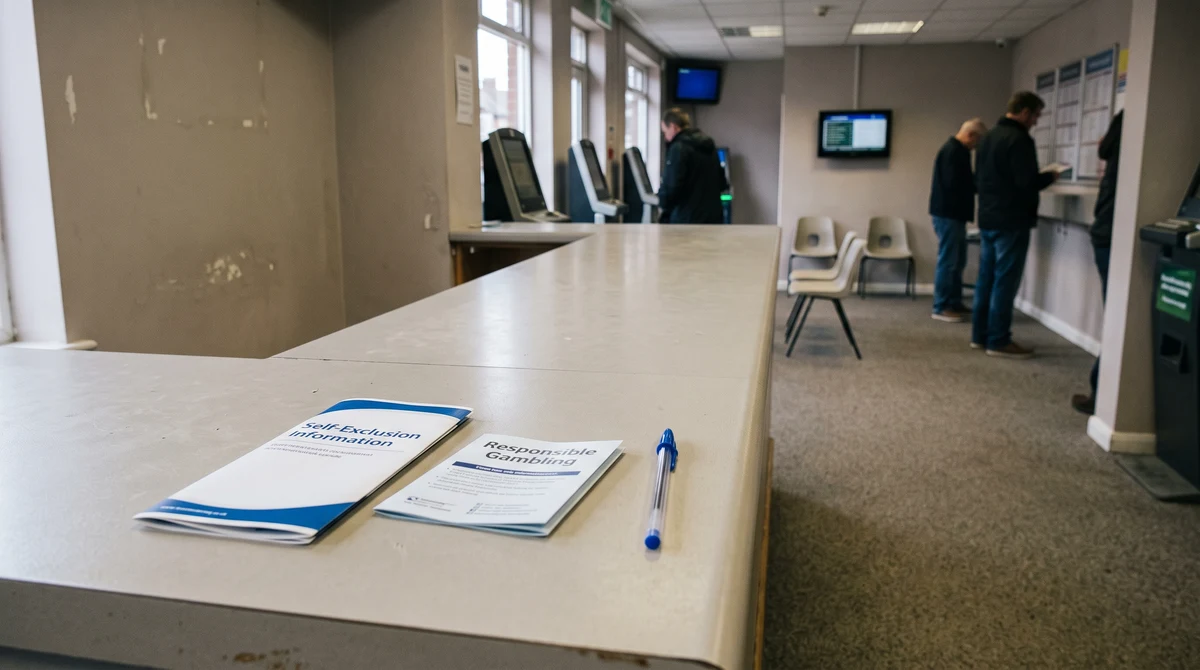
Great Britain had 9,075 active betting-shop self-exclusions during the period from 1 April 2025 to 1 April 2026, according to a Gambling Commission freedom of information response published on 15 September 2026.
The figures provide a recent measure of demand for protection in betting shops. They also reveal a gap in oversight. The Commission does not hold one total covering every land-based self-exclusion scheme in Great Britain.
What the figures show
The Commission recorded 9,075 active exclusions in MOSES, the Multi-Operator Self-Exclusion Scheme for betting shops. This is a snapshot of people whose exclusions were active at the end of the reporting period. It is not a count of new enrolments.
SENSE, the multi-operator scheme for casinos, recorded 12,445 active self-excluded customers. The Commission said those customers enrolled over the previous three years and remained excluded. The figure therefore includes people who joined before the 2025 to 2026 reporting period.
- MOSES: 9,075 active betting-shop exclusions.
- SENSE: 12,445 active casino exclusions.
- SENSE database removals under earlier terms: 8,695 people.
The 8,695 people removed from the SENSE database under earlier terms and conditions must not be added to the 12,445 figure. The number does not represent a second group of active customers or new enrolments.
No national total
The freedom of information request covered four schemes. Only MOSES and SENSE supplied figures for the period. The Commission said it did not hold equivalent data from BACTA, which covers arcades, or the Bingo Association.
The available figures are separate scheme snapshots, not a combined measure of all land-based self-exclusions in Great Britain.
The data also exclude Northern Ireland, the Channel Islands and the Isle of Man. Those jurisdictions operate under different gambling arrangements from Great Britain.
The Commission’s published guidance says multi-operator schemes cover the same type of land-based gambling within a customer’s area. Betting, casino, bingo and arcade operators must participate in the relevant scheme under Social Responsibility Code Provision 3.5.6.
What the numbers do and do not measure
The Commission defines an active self-exclusion as one that remains live or enforced, regardless of when it was added. The count can include the customer’s chosen exclusion period and an additional retention period, unless the customer takes positive action to return to gambling.
This makes the figures useful for measuring the number of people currently seeking protection. They do not show how many people entered a scheme during the year, how many breached an exclusion or how many appear in more than one scheme.
The Commission has previously warned that self-exclusion data can be difficult to compare. Individual operator returns may count one person several times when that customer excludes from multiple operators. Multi-operator schemes also report different measures, including new exclusions, individuals and active customers.
Regulatory pressure on operators
The figures come as the regulator continues to enforce land-based self-exclusion rules. On 31 July 2026, the Commission imposed a £150,000 financial penalty on Holland Park Leisure Limited after finding that the Leicester-based adult gaming centre operator failed to participate in a required multi-operator scheme. The Commission announced the action on 18 August 2026.
The operator also faces a third-party audit of its policies, procedures and staff training. The Commission said participation in a recognised scheme and effective controls to prevent excluded customers from gambling are licence requirements, not optional measures.
For policymakers, the data show the scale of demand in two major sectors while leaving the wider picture incomplete. Until all relevant schemes provide comparable figures, the 9,075 MOSES exclusions and 12,445 SENSE exclusions should remain separate measures.