


Parliament Challenges Legal Basis of Gambling Commission Risk Checks
MPs are seeking answers on the legal basis, evidence and racing-sector impact of planned Financial Risk Assessments, whose launch date remains unsettled.
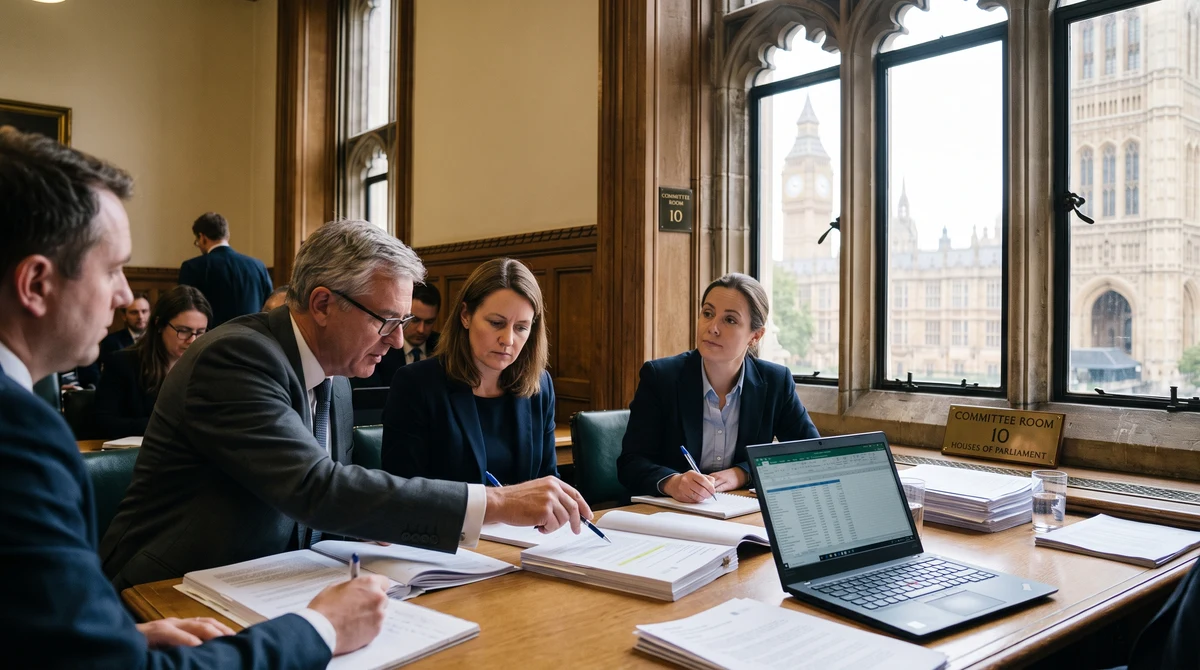
Parliament is seeking answers on the legal basis, evidence and potential economic impact of the Gambling Commission’s planned Financial Risk Assessments. The launch date has not been confirmed.
Great Britain’s planned Financial Risk Assessments face fresh parliamentary scrutiny. Liberal Democrat MP Chris Coghlan has asked the Department for Culture, Media and Sport to explain the Gambling Commission’s legal powers, evidence base and expected impact on the racing industry.
Coghlan submitted the written questions on 28 August 2026. They were due for answer on 2 September 2026. The UK Parliament pages show the questions, but no government answer was displayed at the time of publication.
What Parliament is asking
One question asks which statutory powers the Commission is relying on to introduce Financial Risk Assessments. It also asks what consultation took place with the Culture Secretary and what parliamentary scrutiny should apply to regulatory changes of this kind.
A second question asks whether the Government has assessed the possible effect on:
- turnover across the licensed gambling market
- Horserace Betting Levy receipts
- the wider racing sector
Coghlan also asked whether the department had received or assessed an impact assessment, or equivalent evidence, before the policy proceeds.
Checks are planned, but not fully live
The Gambling Commission announced on 7 July 2026 that it would introduce the checks in stages. The first stage would cover the largest operators and customers exceeding £5,000 in net deposits over a rolling 24-hour period.
The date for that stage has not been fixed. The Commission said it would confirm the timetable in a formal consultation response after further engagement with operators and other stakeholders.
The July announcement confirmed the policy direction, but did not set a final effective date for the live system.
Why the legal question matters
Financial Risk Assessments are not the same as a general affordability check. The Commission describes them as targeted assessments for high-spending remote gambling customers who may be experiencing current financial difficulty.
The proposed process would use limited information from credit reference agencies. The Commission says the assessment would not affect a customer’s credit score or give operators access to raw bank-account records.
The Commission already has a Licence Conditions and Codes of Practice provision for the pilot phase. That provision came into force on 30 August 2024.
The planned live rollout raises separate questions about the legal route, the wording of any new or amended licence condition and the level of parliamentary oversight.
Evidence and the racing dispute
The regulator says pilot data found that high-spending customers were more likely to have recent defaults or debt-management plans than consumers in wider comparison groups. Its July update said fewer than 3% of accounts would need an assessment once the system was fully implemented.
The Commission also acknowledged that the policy could reduce gross gambling yield. It said any reduction should mainly result from lower spending by high-spending customers experiencing financial difficulty.
The parliamentary questions seek a clearer assessment of how that effect could influence gambling turnover, levy receipts and racing funding.
The issue is sensitive for British racing because the Horserace Betting Levy is linked to betting activity on British racing. The questions do not establish that levy receipts will fall. They ask whether the Government has assessed that possibility and what evidence supports its position.
What happens next
The immediate development is parliamentary scrutiny through written questions. It is not new legislation, a court ruling or a final enforcement decision.
The next substantive regulatory step is the Commission’s formal consultation response. That document is expected to set the Stage 1 timetable.
Until the response is published, operators and customers do not have a confirmed effective date for the live assessments.
A separate Gambling Commission freedom of information response published on 3 September 2026 records a request for correspondence with the Department for Culture, Media and Sport about the pilot’s evaluation.
The Commission withheld the requested information, subject to review rights. The decision does not show that evidence was absent, but it adds to the debate over how much material will be available before implementation.