


Report Says Offshore Gambling Networks Are Targeting GAMSTOP Users in Great Britain
A Fincord report says offshore networks use social media and mirror sites to reach self-excluded customers outside Great Britain’s licensed market.
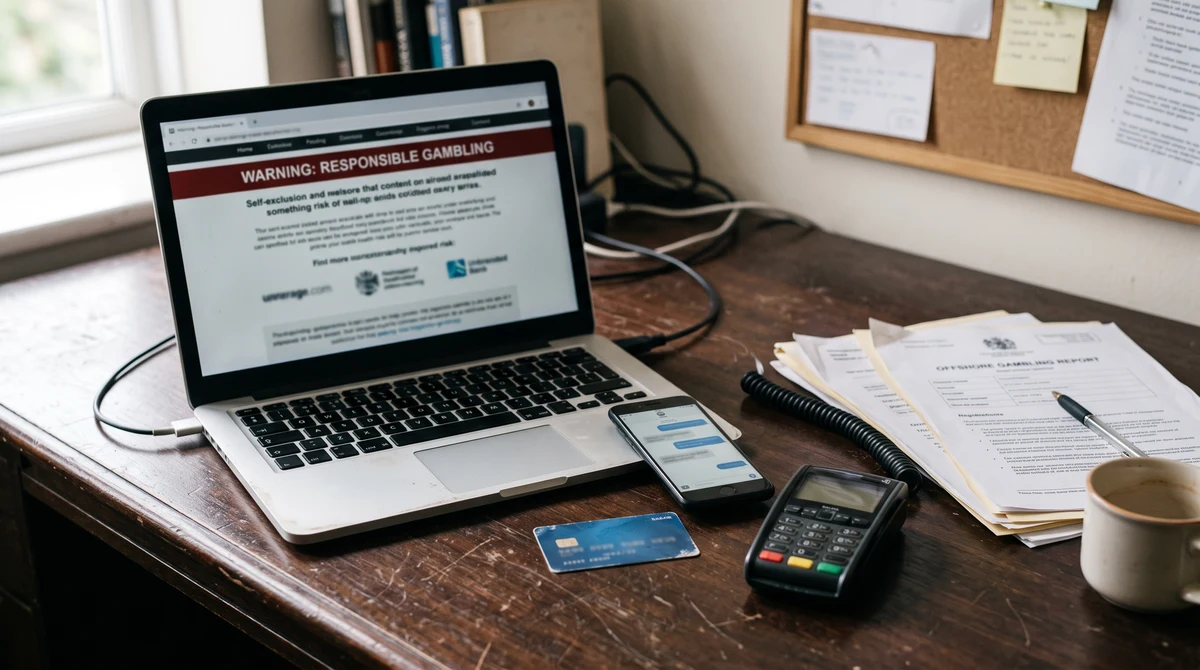
Offshore gambling networks are reaching customers in Great Britain who have self-excluded through GAMSTOP, according to a Fincord Intelligence report published on September 7, 2026, and highlighted by the Betting and Gaming Council.
The report says operators use social media, search engines, affiliates, influencers, Telegram, WhatsApp and mirror websites to reach customers outside the protections required in the regulated market.
Fincord’s central warning is that self-exclusion protections can be bypassed when customers are redirected to operators outside the Gambling Commission’s licensing system.
Report estimate is not official market data
Fincord estimates that illegal online gambling generated about US$50 billion in gross revenue worldwide during 2025. That figure is a report estimate. It is not Gambling Commission data on the size of the Great Britain market.
The report also claims that about 5,000 operator structures used more than 15,000 websites and applications. It says mirror domains, virtual private networks and browser-based applications allow blocked services to return under new addresses.
Fincord identifies the promotion of so-called “Non-GAMSTOP” sites as a route to customers who have joined GAMSTOP. It says some services advertise limited or absent identity checks, financial checks and betting limits.
Pressure moves beyond website blocking
The report argues that action against individual websites alone will not stop the networks. It calls for measures targeting the wider infrastructure that supports illegal operators.
- Payment providers and financial intermediaries.
- Cryptocurrency services and other payment channels.
- Affiliate marketers and advertisers.
- Software suppliers and hosting companies.
- Social media and messaging platforms.
The Betting and Gaming Council said on September 7 that regulators, law enforcement agencies, payment companies and technology platforms should coordinate action against those networks.
The council made similar demands in an open letter dated June 16, 2026. It said illegal gambling operators were using technology platforms to reach self-excluded and vulnerable customers. The letter was an industry call for action, not an enforcement decision by a regulator.
What GAMSTOP covers
GAMSTOP allows a person to exclude themselves from online gambling businesses licensed by the Gambling Commission through one request. The scheme applies to licensed operators serving customers in Great Britain.
The Gambling Commission says online gambling companies serving British consumers must hold a licence. It also warns that illegal overseas websites may not provide the required protections. The commission says it tracks and takes action against such sites when they are identified.
A GAMSTOP self-exclusion does not give the Gambling Commission direct control over an offshore operator that does not hold a Great Britain licence. That gap is the main enforcement problem identified by the Fincord report.
Great Britain is not Northern Ireland
The report’s British-market claims concern Great Britain, meaning England, Scotland and Wales. The Gambling Commission regulates gambling under the Gambling Act 2005 in those three nations.
Northern Ireland has a separate framework under the Betting, Gaming, Lotteries and Amusements (Northern Ireland) Order 1985, as amended by the 2022 Act. The Department for Communities, district councils, courts and the Police Service of Northern Ireland have responsibilities under that system.
The Gambling Commission says it does not regulate gambling activity in Northern Ireland. It also says advertising unlicensed remote gambling there is an offence, while some Gambling Act provisions apply.
What happens next
The Fincord findings put the practical focus on companies that help illegal operators find customers, process deposits, promote websites and keep services online.
The report does not establish the size of the illegal Great Britain market. Its global revenue estimate should not be presented as settled official data.
The immediate policy question is whether payment firms, advertisers, technology platforms and regulators can block the wider infrastructure, rather than only individual domains.